
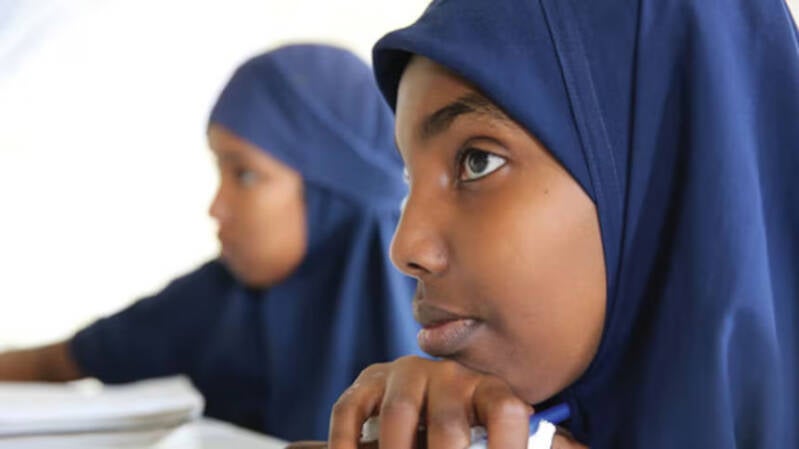
Education is a fundamental right and a critical lifeline for children affected by humanitarian crises. It restores a sense of normalcy, protects children from harm, and equips them with the skills needed to contribute to peace, stability, and economic growth. Investing in education is therefore an investment in long-term recovery and sustainable development.
Somalia has endured more than three decades of conflict, resulting in the loss of two to three generations of youth and the near-collapse of its education system. While reconstruction efforts by the Federal Government of Somalia (FGS) have made important progress, education has remained under-prioritized. As a result, access to quality education remains extremely limited, and learning outcomes are among the lowest in the region.
Somalia faces one of the highest poverty rates in sub-Saharan Africa, with widespread food insecurity and vulnerability. Millions of children are affected by conflict, displacement, and trauma. Education systems struggle to cope with weak institutional capacity, limited financing, and persistent insecurity. Attacks on schools, teachers, and students, along with displacement and fear, continue to disrupt children’s access to safe learning environments.
The consequences are severe. Somalia’s primary school gross enrolment rate stands at approximately 14 per cent, and children receive on average fewer than two years of schooling in their lifetime. Girls are disproportionately affected, particularly in rural areas, where over 70 per cent of women have never attended school. Children with disabilities and other marginalized groups face additional barriers, including discrimination and a lack of trained teachers.
Teacher shortages and low qualifications further undermine education quality. Fewer than 40 per cent of teachers are fully qualified, female teachers remain critically underrepresented, and salaries are extremely low. These challenges contribute to high dropout rates, leaving children exposed to exploitation, child labour, early marriage, or recruitment by armed groups.
Somalia’s young and rapidly growing population places increasing pressure on an already fragile education system. Without urgent investment, the country risks continued dependence on expatriate expertise and the loss of local capacity essential for sustainable recovery across all sectors, including health, governance, and infrastructure.
Education must therefore be placed at the center of Somalia’s recovery and development agenda. Strengthening basic, secondary, and higher education is essential to building local capacity and empowering Somalis to lead their own reconstruction. Increased and sustained investment—particularly for girls’ education, teacher development, and inclusive learning—is critical to breaking cycles of poverty and conflict and securing a peaceful and prosperous future for Somalia.